
Impact
Creating Positive Change for Young People
At Amazing Minds, we are committed to ensuring that our programmes make a meaningful difference to the young people we support. We regularly measure outcomes using recognised evaluation tools, including the Strengths and Difficulties Questionnaire (SDQ), which is widely used across local authorities, education, schools, public health and children's services to measure emotional wellbeing, behaviour, relationships and overall wellbeing in children and young people. We also use CORE-10, participant feedback and anonymous programme evaluations to understand the impact of our work and drive continuous improvement.
Secondary School Outcomes
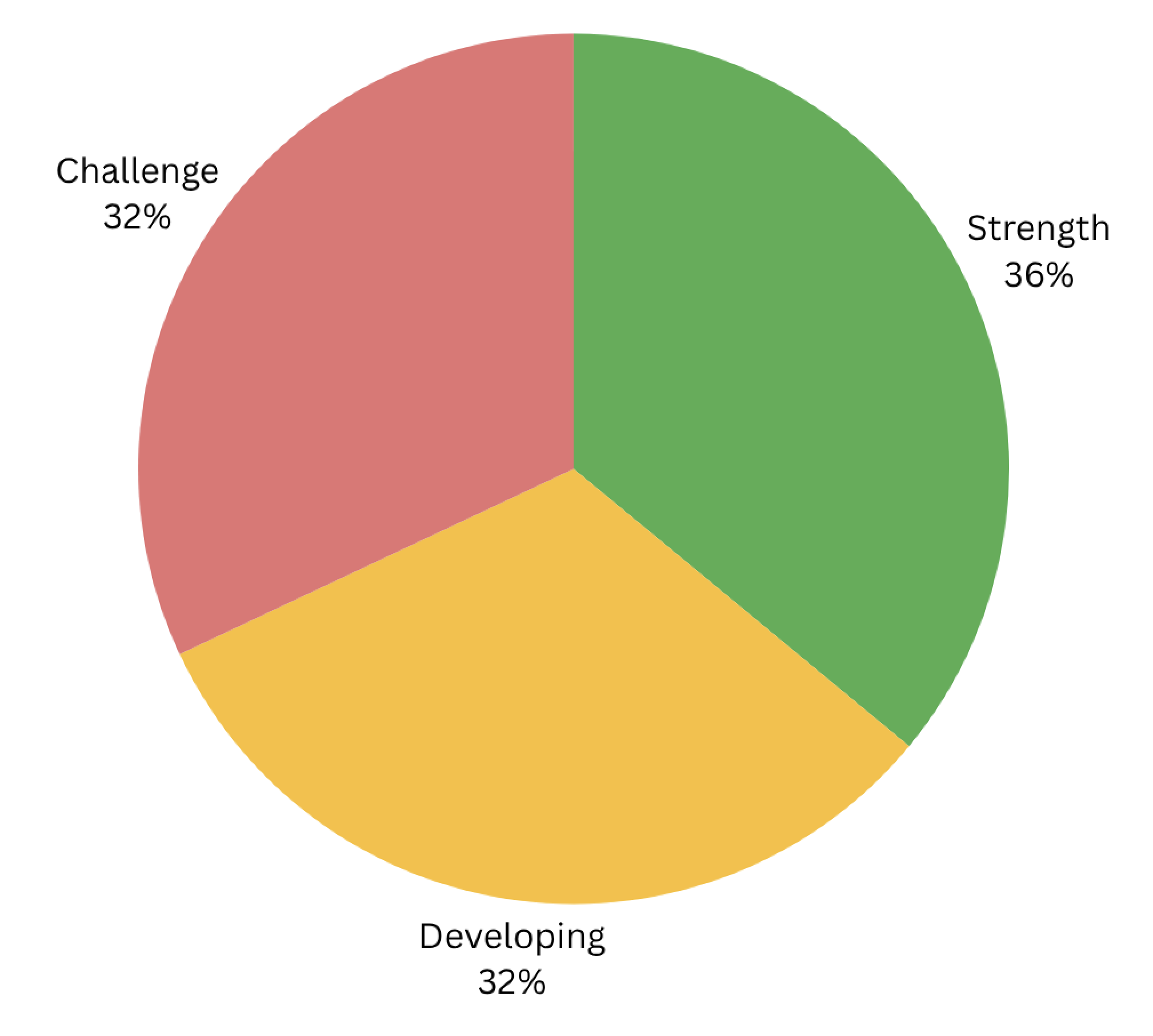
The following outcomes were measured using Strengths and Difficulties Questionnaires (SDQs) completed at the start and end of the Amazing Minds programme across several secondary schools. 91% of young people recorded an improvement in their SDQ score, with 95% identified within the Strength category by the end of the programme.
Session One Results
Session Six Results
By the end of the programme:
✅ 91% of young people recorded an improvement in their SDQ score
✅ 95% of young people were identified within the Strength category by the end of the programme
✅ 59% moved from Challenge or Developing into the Strength category
✅ The Challenge category reduced from 32% to just 5%
Students said the Amazing Minds programme was enjoyable
Survey Results for Amazing Minds:
Students said they felt happier after completing the Amazing Minds programme
Students said the Amazing Minds programme was helpful
Students said they felt more confident after completing the Amazing Minds programme
Students said they felt more resilient and able to deal with difficulties after completing the Amazing Minds programme
Students said they would recommend the Amazing Minds programme to others
Primary School Outcomes
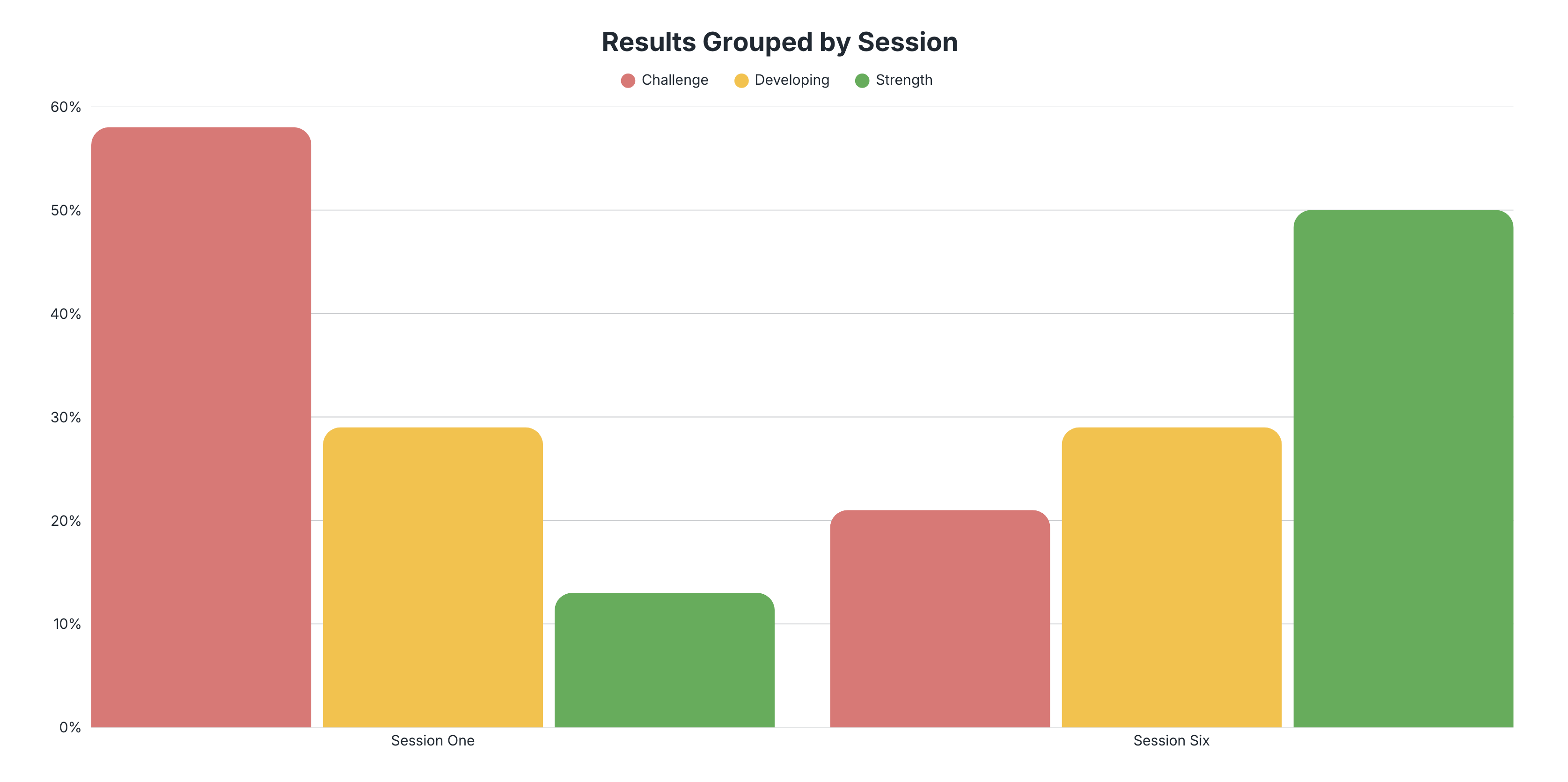
The following outcomes were measured across eight Medway primary schools using pre- and post-programme SDQs completed for the same group of children. 87.5% of young people recorded an improvement in their SDQ score, with many moving from the Challenge category into Developing or Strength by the end of the programme.
Session Six Results
By the end of the programme:
✅ 87.5% of young people recorded an improvement in their SDQ score
✅ Average SDQ difficulties reduced by 26% across the group
✅ 64.3% moved out of the Challenge category by the end of the programme
✅ Strength outcomes increased from 12.5% to 50.0%
✅ No child moved into a higher-difficulty category during the programme
(Amazing Minds Report 2026 Partnership Commissioning - Medway Council Public Health and the NHS)
These results show positive movement across the group, with the large majority of young people demonstrating improvements in their wellbeing scores and many moving into more positive outcome categories by the end of the programme.
Students said the Amazing Minds programme was enjoyable
Survey Results for Amazing Minds:
Students said they felt happier after completing the Amazing Minds programme
Students said the Amazing Minds programme was helpful
Students said they felt more confident after completing the Amazing Minds programme
Students said they would recommend the Amazing Minds programme to others
What Young People Say
"I feel calmer and happier" Year 7 Student - The Robert Napier School
“I feel calmer and happier, and I think my learning has got better, please can you help my friend.”
"I have more friends" Year 5 student - Oaklands Primary School
“It made me feel happier because before I didn’t do Amazing Minds, it was hard for me to work and I kept falling out with all my friends and now I have more friends and I am doing better with my work.”
"I think it will really help you." Year 5 Student - Bligh Primary School
“Recently, I have done Amazing Minds with Mrs Collins and there is another coach you can do this with. I know they will help you to become more confident and make sure you are relaxing and having a growth mindset. If you make the decision to go to Amazing Minds, I think it will really help you.”
"I enjoyed it." Year 6 student - Academy of Cuxton Schools
“It helped me when I was upset and I enjoyed it.”
"Really helped me" Year 6 student - Halling Primary School
“The techniques have really helped me.”
"I am proud of myself" Student - Oaklands Primary School
“I really like school. I love coming in. I love learning. I am proud of myself.”
"My days sometimes start perfectly because of mindfulness" Year 5 student - Medway Primary School
“Amazing Minds helped me to calm down, my days sometimes start perfectly because of mindfulness. Our family is happier. If someone needed help with their mental health. I would say give Jo and Aslan a call as they are really good at helping.”
What Parents and Carers Say
"I can honestly say that we noticed a different child week on week.” Parent – Year 11 Student
"My daughter has struggled with her nerves in different situations but especially in exam conditions, so I searched for some help. Jo came highly recommended and from our first meeting I was completely inspired and knew the Amazing Minds programme would help my daughter. I can honestly say that we noticed a different child week on week.”
"The impact on my daughter's life has been profound" Parent - Year 12 Student
"My daughter participated in the Amazing Minds programme when attending Sixth Form. This experience played a pivotal role in boosting her self-esteem and confidence. The Amazing Minds programme undoubtedly equipped her with the tools and mindset needed to navigate the challenges of life beyond Sixth Form. The impact on my daughter's life has been profound, and I am confident that this program has the potential to empower and inspire many more young minds.”
"Her spark returned!” Parent – Year 7 Student
“Amazing Minds was able to help my daughter understand her mind and how it works at a relatable level for her. The sessions equipped her with techniques to help her manage difficulty. As the sessions progressed her sleep and concentration improved. Her spark returned!”
"I would recommend Amazing Minds and mindfulness as a great tool for parents" Parent - Year 4 Student
"I would recommend Amazing Minds and mindfulness as a great tool for parents, it's really changed us a family and mindfulness will always be a part of our family life."
What Educational Professionals Say
"Brilliant we love Amazing Minds!" - Christian Markham – Headteacher - Bligh Primary School.
"Amazing minds has had a very positive impact on our school and stakeholders. Our teaching team has benefited greatly from the Amazing Minds Coaches training. This has allowed staff to practise in school which allows the excellent program to reach more children. Alongside this, Aslan joining us in school has been terrific for some of our children, keeping them happy and engaged in school and helping them to process their feelings and regulate their behaviour. Brilliant we love Amazing Minds!"
"The whole course was very enjoyable, easy to understand and process." Hollie Wright - Transition Coach East Kent College Group – Post 16
“The students all agreed that the techniques you have taught them have helped, they have all used them. I feel that the whole course was very enjoyable, easy to understand and process. I regularly remind myself I am safe from the sabre tooth tiger!!”
Want to Know More?
Whether you are a parent, carer, school, college, university, charity or community organisation, we'd love to discuss how Amazing Minds could support the young people you work with.
Data Note
To make findings easier to understand and more person-centred, Amazing Minds uses the terms Strength, Developing and Challenge when presenting Strengths and Difficulties Questionnaire (SDQ) outcomes. These correspond to the SDQ categories Normal, Borderline and Abnormal used within the SDQ framework.